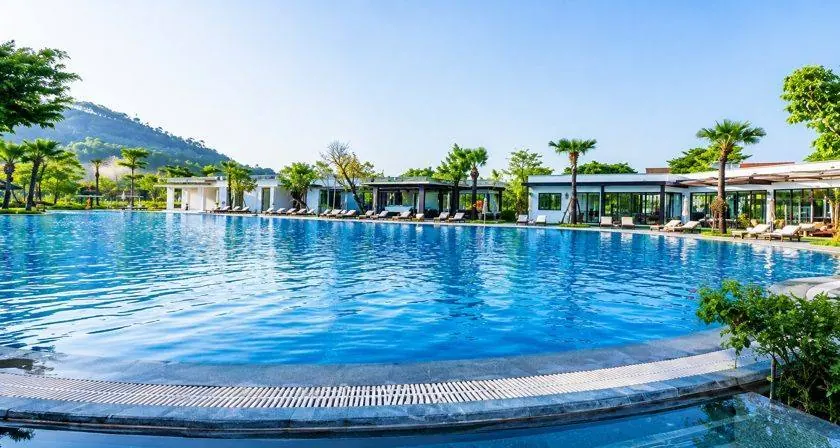
Close enough for a day trip, far enough that the city stops following you. Come for a single soak, or stay and use it as often as you like.
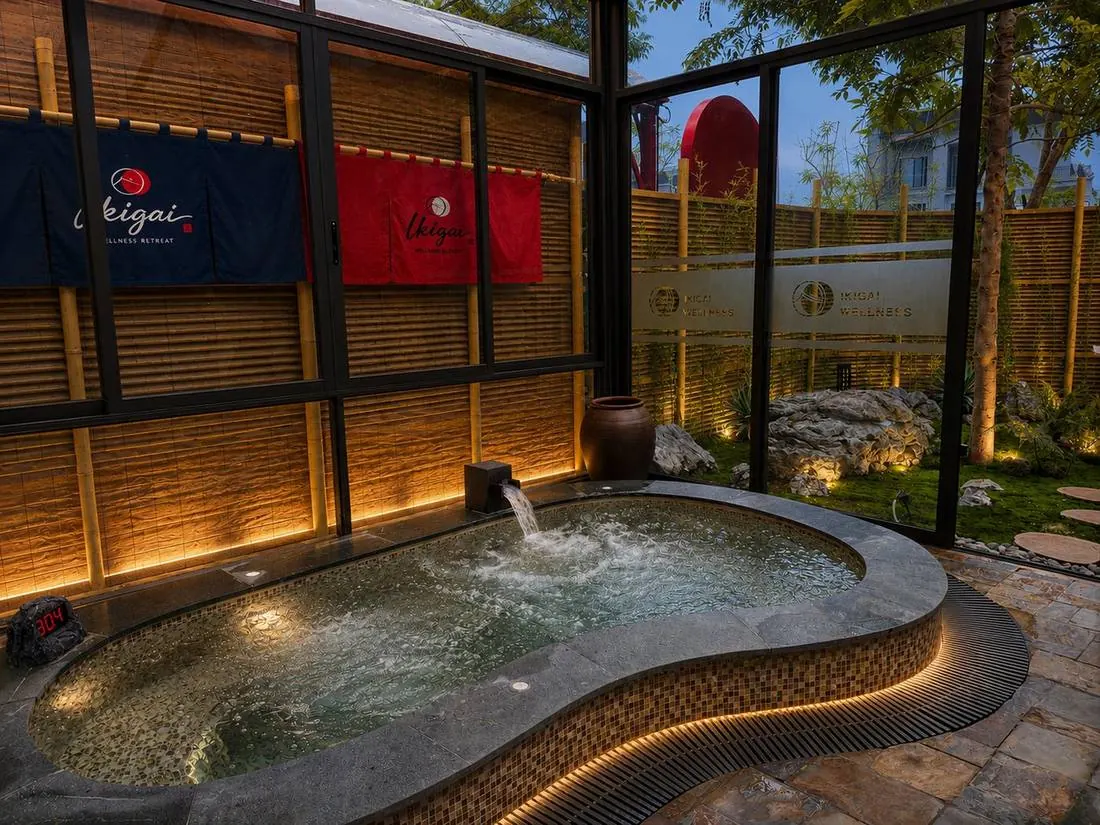
In Japan, using hot water to rest and recover has its own word, tōji. What makes it work is not the temperature but the sequence: soak until you are warm through, get out and let your pulse settle, drink water, then go back in.
Ikigai's bathing house is laid out so you can do that whole loop in one place. The heated herbal bath, the jacuzzi and the dry sauna sit together, with somewhere to sit and warm water between rounds.
To be precise about it: this is a Japanese-style bathing house, not a natural hot spring. The water is heated and mineral and herb infused, and the ritual around it is the Japanese one.
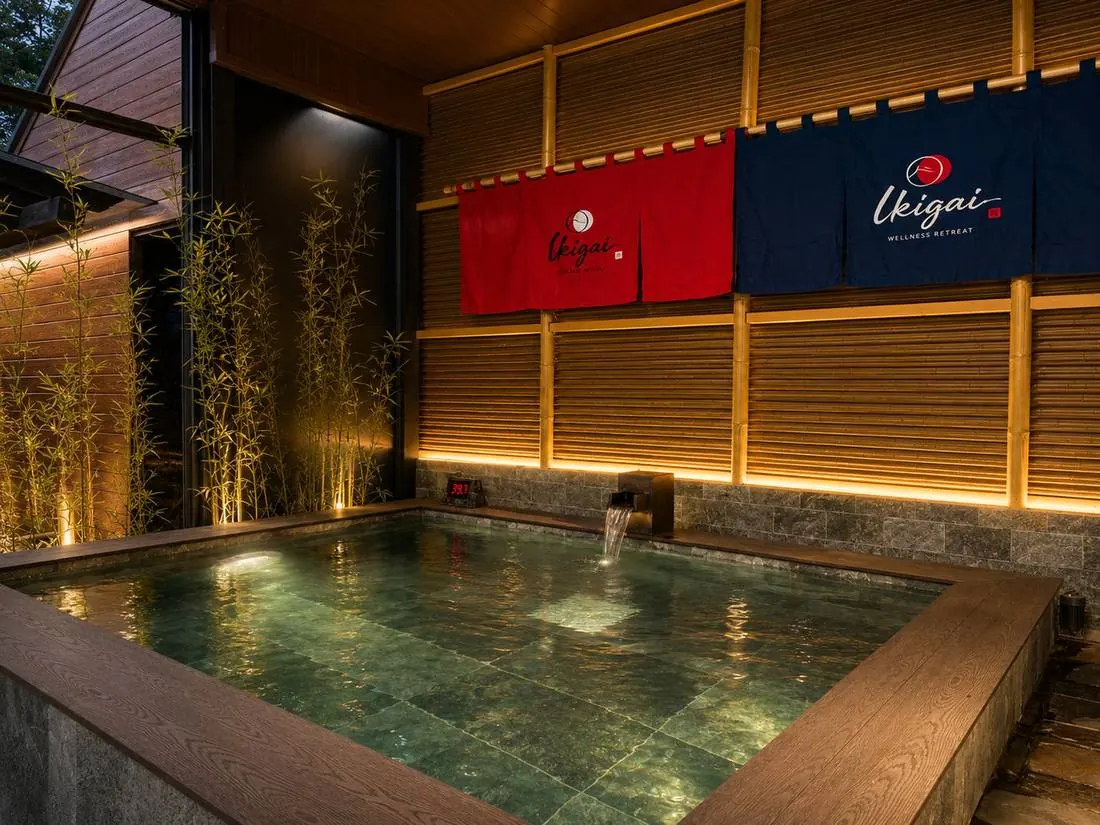
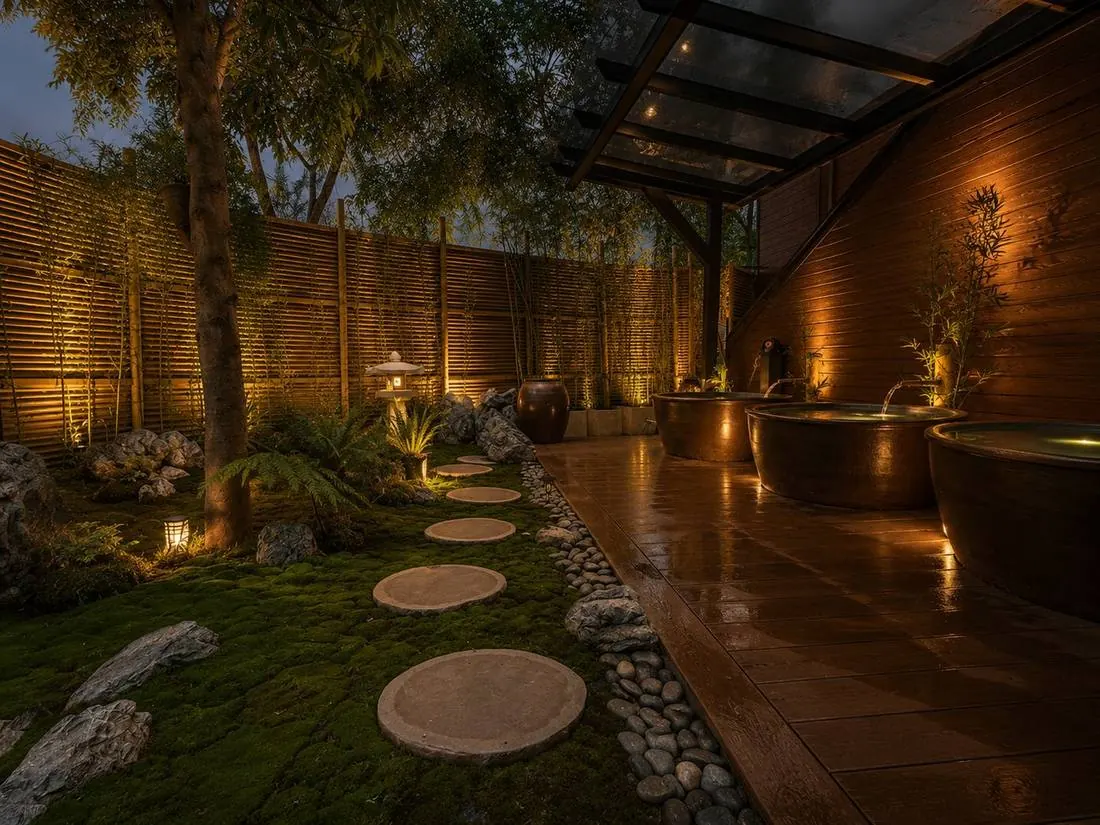
Nothing complicated, but the order matters. Staff at the bathing house will walk you through it if you ask.
This is the one rule that matters most in Japanese bathing. You get clean first, then you soak. Bathing here is mixed, so swimwear stays on.
Sit on the step and let your legs and lower body adjust to the heat before going in to the shoulders.
A racing pulse, a flushed face or light-headedness means it is time to rest. There is nothing to push through.
Hot bathing dehydrates more than people expect. Rest five to ten minutes before the next soak.
Keep sauna rounds short and always leave a pause between the two.
Dry off, stay warm and sit for at least fifteen minutes before eating, driving or exercising.
Towels and slippers are provided at the bathing house, so there are really only two things to remember:
Do not bathe straight after a large meal or after drinking alcohol. If you have just eaten, wait about an hour.
A resident traditional-medicine physician reads the pulse of every guest at no charge. If you have an existing condition, a few minutes with them before you bathe is time well spent.
Groups of two to ten guests pay 499,000 VND per person, including a wellness lunch and a day-use room; message us in advance and we will set the time slot. All prices are charged in Vietnamese dong; USD figures are indicative.
This is how many day guests end up arranging things. Nothing is compulsory, drop whatever does not appeal.
| 09:00 | Arrive, welcome tea, pulse reading and a short consultation |
| 09:30 | First bathing round, alternating with jacuzzi and sauna |
| 11:00 | Rest in the day-use room or walk the Zen garden |
| 12:00 | Wellness set lunch at the restaurant |
| 14:00 | Therapeutic massage, herbal hair wash or a foot soak |
| 15:30 | Classical Sivananda yoga on the daily schedule |
| 16:30 | A second, gentler bathing round |
| 17:00 | Check out and drive back ahead of the evening traffic |
Take Thang Long Boulevard, then the CT03 expressway. Distances and times below are from Google Maps; rush hour can add ten to twenty minutes.
| From | Distance | Driving time |
|---|---|---|
| Hoan Kiem Lake, Old Quarter | 43 km | about 70 min |
| West Lake, Tay Ho | 48 km | about 70 min |
| Noi Bai International Airport | 61 km | about 75 min |
Private transfer: 300,000 VND each way within 40 km, then 8,000 VND per kilometre beyond. Address: C15 - 12&12A Van Loc, Xanh Villa, Yen Xuan, Hanoi.
Open directions in Google MapsMessage us on WhatsApp at +84 869 926 166 before you travel. We answer in English and can confirm transfers, dietary needs and what is running on the day of your visit.
The onsen and treatments at Ikigai support relaxation and recovery. They do not replace medical consultation or treatment, and how each person responds differs.
Message us to reserve your visit and arrange a private transfer if you need one.