Reiki comes from Japan, where Mikao Usui set it down in its present form in the early twentieth century. The name joins two Japanese words: Rei, a wisdom larger than oneself, and Ki, life energy. A session works to let that energy move again, so the body carries less weight, the mind runs quieter and the emotions settle back into balance.
What Reiki tends to is what the Japanese call Ki, your life energy. When Ki runs low it does not run low in one place. The body tires first. Then thinking turns cloudy. Then patience goes. And finally come the decisions you look back on a few days later without understanding why you chose that way. A session works on all four layers at once, because in practice they were never separate.
The nervous system shifts out of guard duty and into rest. Breathing slows, shoulders and jaw let go, muscles stop holding. Falling asleep mid-session is common, and most guests say they sleep more deeply that night.
The stream of thought that never stops is allowed to stop for an hour. Nothing to do, nothing to react to, nobody waiting on an answer. This is the kind of quiet an ordinary day almost never leaves room for.
Tension stored over months often leaves here. Sometimes as one very deep sigh. Sometimes as tears that arrive without being about anything in particular. That is the body letting go, not the body growing weak.
Once the body has rested and the mind has settled, the view of work and of relationships tends to clear. The problem does not shrink, but you stop looking at it through a layer of exhaustion. Many guests say this clarity is what stays with them longest.
People experience this differently. Some feel all four layers clearly. Some simply get one very good sleep. Both are a good outcome.
Every private Reiki session at Ikigai is given by our Reiki Master. Prices are per person and do not include meals or accommodation.
| Length | Price |
|---|---|
| 60 min | 1.000.000 |
| 3 sessions × 60 min | 2.500.000 |
Each course runs 3 days and 2 nights, taught in a space away from everyday life. Reiki Level 1 and Level 2 are taught as one class, as are Karuna Reiki 1 and 2.
| Course | Tuition | All inclusive |
|---|---|---|
| Reiki Level 1 & Level 2Taught as one class · 3 days 2 nights | 10.800.000 | 15.300.000 |
| Reiki Master3 days 2 nights | 25.000.000 | 29.500.000 |
| Karuna Reiki 1 & 2Taught as one class · 3 days 2 nights | 10.800.000 | 15.300.000 |
| Karuna Reiki Master3 days 2 nights | 25.000.000 | 29.500.000 |
The all inclusive price adds board and lodging for 3 days and 2 nights at 4,500,000, covering 2 nights and 6 wholesome meals.
Three days and two nights for those who want to experience Reiki deeply rather than train to practise it.
Pool, onsen, meditation, yoga, qigong, singing bowls and workshops, run on Ikigai's daily schedule. Applies to residential courses and the Reiki Retreat.
No oils, no massage, no manipulation. If strong hands-on therapies put you off, this is an easy place to start.
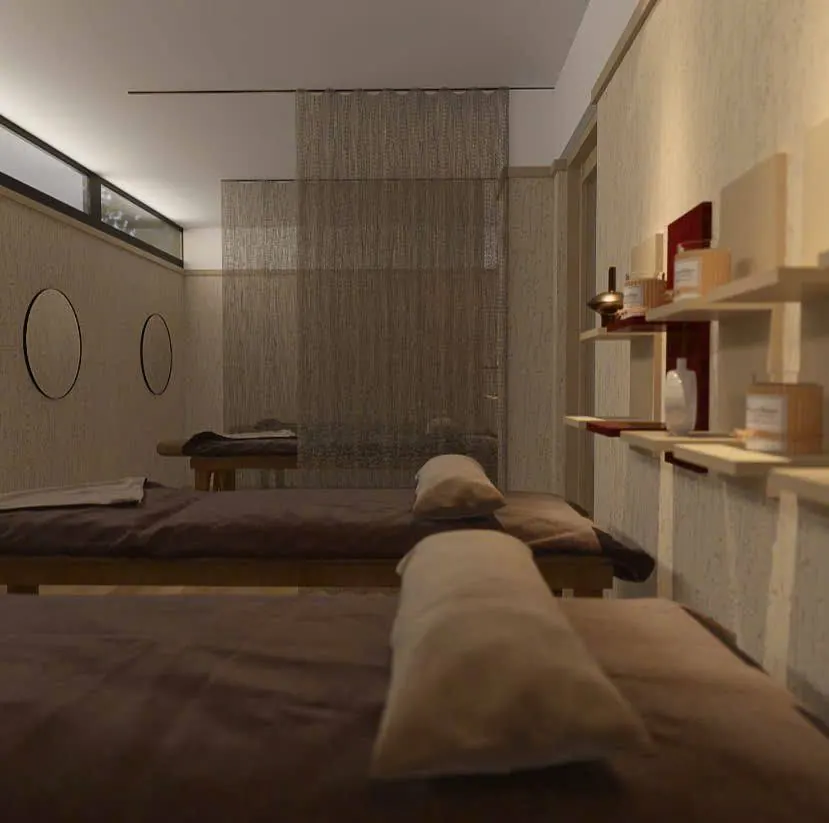
You lie on a treatment table in a quiet room, fully clothed. If lying down is difficult, the session can be given seated.
The practitioner rests their hands lightly through a sequence of positions around the head and shoulders, the abdomen and the feet. Each position is held for three to ten minutes, with others added as you need.
Most guests describe warmth spreading from where the hands rest, the body sinking into the table and then feeling light, and a depth of relaxation an ordinary day rarely allows. Falling asleep mid-session is common and perfectly fine.
Drink plenty of water and give yourself a little more rest rather than rushing back into your usual pace. Some people feel slightly tired or heavy-headed on the first day; it usually passes quickly. Most say the energy is clearest the following day.
The International Center for Reiki Training notes that a session usually runs 45 to 90 minutes. At Ikigai a private session is 60 minutes.
Ikigai offers both, and guests often ask which to choose.
| Reiki | Himalayan singing bowls | |
|---|---|---|
| Medium | Still hands, no sound | Sound and vibration from the bowls |
| Contact | A very light touch, or hands held just above the body | No touch, bowls placed around the body |
| Spaces | Complete quiet | An open room where the ringing carries |
| Suited to | People who prefer stillness and dislike noise | People who settle easily through sound |
Swipe sideways to see the full table.
Many guests take Reiki in the afternoon after the onsen, then close the day with singing bowls. The two do not conflict.
Reiki is a relaxation and energy-restoring practice. Ikigai presents it as exactly that and promises nothing beyond it.
Reiki runs by appointment so the room stays quiet enough. Message ahead and we will arrange the room and a suitable length.
Message or call and we will help you choose the programme that suits your body.